Technical drawing, also known as drafting, is the technique of creating engineering drawings done with compasses, rulers, and computers. Coach Ed Batchelor has created a pamphlet on technical drawing to introduce SECME students to technical drawing. Click here for the Technical Drawing for SECME submissions PDF.
Click here for a fast, Flash based introduction from Engineering the Future. I especially like how EtF handles orthographic projections.
Drawings which contain all the information needed to make the object you have designed, including dimensions and details of components, materials and assembly instructions, are called working drawings. Although working drawings for simple products may sometimes be done in isometric or planometric projection, the normal drawing technique for working drawings is orthographic projection. The BBC GCSE Bitesize has more.

Showing posts with label technical drawing. Show all posts
Showing posts with label technical drawing. Show all posts
Sunday, November 11, 2012
Friday, January 27, 2012
Murphy's Law: Technical Drawing for Mousetrap Vehicle
EDITOR'S NOTE: For a change, the comments are being left ON. I welcome and would appreciate your thoughts -- this technical drawing has not been scored yet, so it will be interesting for your feedback to compare & contrast with the judges. Just keep it constructive, if you'll pardon the pun! :D
 Murphy's Law mousetrap powered vehicle
 Murphy's Law MTV, top and front views
 Murphy's Law MTV, side view
Compare this year's to last year's MTV technical drawing at http://seminolesecme.blogspot.com/2011/01/technical-drawing-for-mousetrap-vehicle.html
 Murphy's Law mousetrap powered vehicle
 Murphy's Law MTV, top and front views
 Murphy's Law MTV, side view
Compare this year's to last year's MTV technical drawing at http://seminolesecme.blogspot.com/2011/01/technical-drawing-for-mousetrap-vehicle.html
Thursday, January 26, 2012
Technical Drawing for Balsawood Bridge
EDITOR'S NOTE: For a change, the comments are being left ON. I welcome and would appreciate your thoughts -- this technical drawing has not been scored yet, so it will be interesting for your feedback to compare & contrast with the judges. Just keep it constructive, if you'll pardon the pun! :D

 Excerpt of technical drawing for balsawood bridge
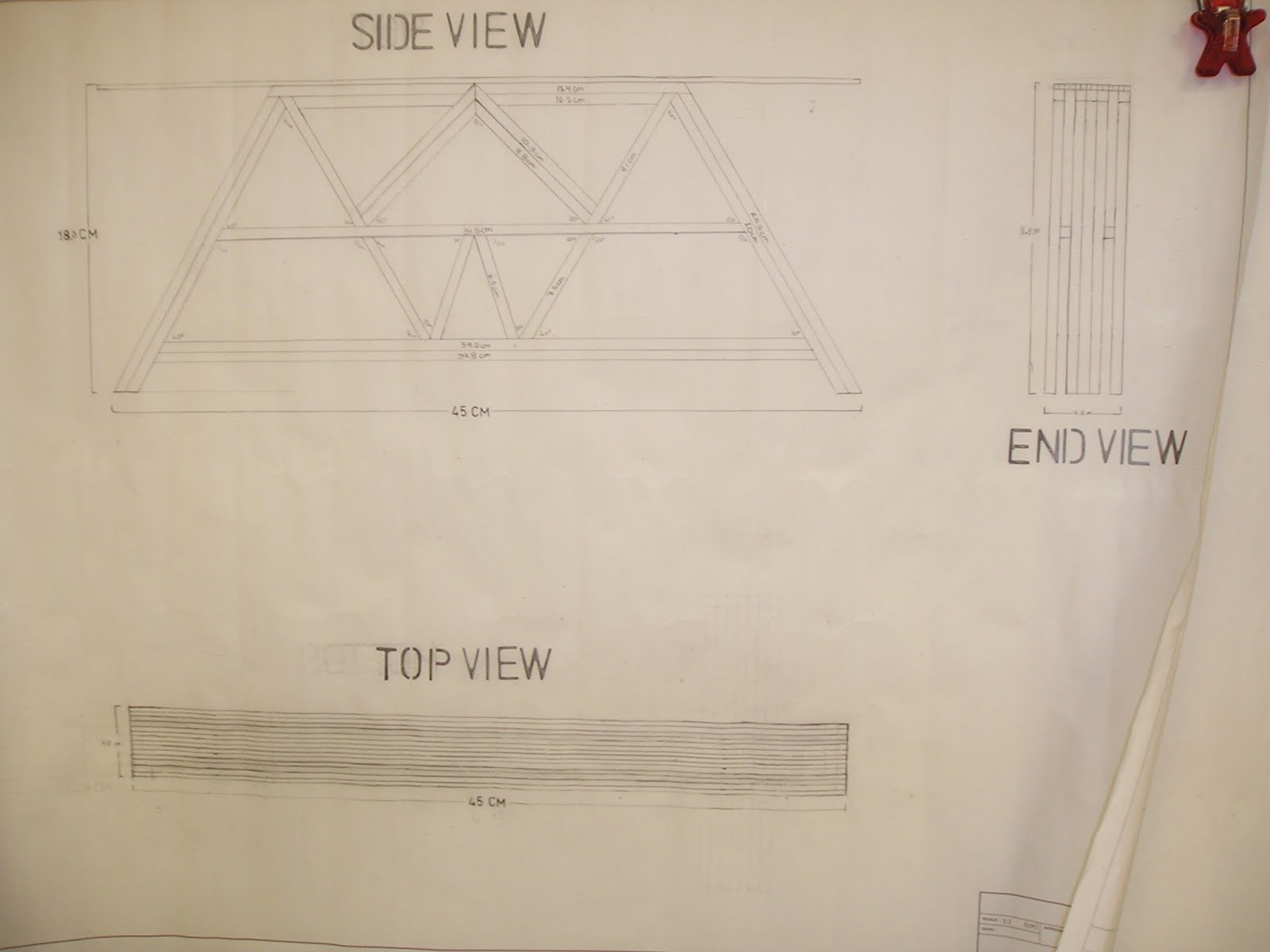
 Excerpt of technical drawing for balsawood bridge
Sunday, January 30, 2011
Technical Drawing for Water Bottle Rocket
EDITOR'S NOTE: Coach Batchelor has created a pamphlet about Technical Drawing for SECME Submissions. Check it out to see how to make your own.


Technical Drawing for Mousetrap Vehicle
EDITOR'S NOTE: For a change, the comments are being left ON. I welcome and would appreciate your thoughts -- this technical drawing has not been scored yet, so it will be interesting for your feedback to compare & contrast with the judges. Just keep it (pardon the pun) constructive! :D


Sunday, November 21, 2010
Technical illustration
Technical illustration community, resources, tutorials, portfolios and interviews.
http://technicalillustrators.org/
http://technicalillustrators.org/
Wednesday, October 27, 2010
FES Speakers on Oct. 27: Edwin Tamang, Kevin Vickers and Jim Kunard
 left to right: Kevin Vickers, Jim Kunard, and Edwin Tamang of the Florida Engineering Society
Edwin Tamang, the Outstanding Civil Engineering Analyst and Kevin Vikers, Engineering Analyst, Roadway Design at Kimley-Horn and Associates, Inc., were the guest speaker for Seminole SECME on Wed., Oct. 27 at 3 PM. Tamang is an airport engineer, and provides services such as runway rehabilitation and taxiway design as part of an aviation team all around Florida. He is a recent graduate of California State Polytechnic University, in Pomona, CA, and volunteers on the scholarship committee of Florida Engineering Society, PBC chapter.
Thursday, October 14, 2010
Engineering the Future: Technical Drawings
Technical drawing, also known as drafting, is the technique of creating engineering drawings done with compasses, rulers, and computers. Coach Ed Batchelor has created a pamphlet on technical drawing to introduce SECME students to technical drawing. Click here for the Technical Drawing for SECME submissions PDF.
Click here for a fast, Flash based introduction from Engineering the Future. I especially like how EtF handles orthographic projections.
Drawings which contain all the information needed to make the object you have designed, including dimensions and details of components, materials and assembly instructions, are called working drawings. Although working drawings for simple products may sometimes be done in isometric or planometric projection, the normal drawing technique for working drawings is orthographic projection. The BBC GCSE Bitesize has more.
Wednesday, October 13, 2010
 Seminole Ridge symmetry
 Technical drawing - mousetrap vehicle
 VEX Round Up practice
 technical drawing - water bottle rocket
 technical drawing - water bottle rocket
 banner
 banner
 banner
 I heart SECME
Friday, May 14, 2010
Technical Drawing paper at Easel Art
To compete in the SECME Olympiad bridge design, mousetrap car design and the water rocket design competitions, a team must enter all parts of the design competition. A team must enter in all of the following categories for each competition a bridge technical drawing, a mousetrap car technical drawing, and a water rocket technical drawing.
 Clearprint 24"x36" 16lb 1000H Title Block/Border Vellum
The bridge and the rocket drawings may be on either 22” x 34” or 24” x 36” size drawing paper. No margin is required around the outside of the drawing. No mounting of the drawing or frames are allowed.
For the mousetrap car, the size of the engineering paper is required to be the standard 18” x 24” (allowing for the drawn one inch margin, the actual drawing is to cover an exposed area of 16” x 22” of the paper), otherwise it will not be evaluated. No mounting of the drawing or frames are allowed.
Where can I get technical drawing paper?
Seminole SECME purchases technical drawing paper at Easel Art Center, 810 Park Ave, Lake Park, FL (south of Northlake Blvd). Easel is on the south side of the street and the east end of the plaza, located after the post office and oriental market. Their phone #561-844-3111
As of May 2010, their price for 24x26" plain paper (used for practice) was $1.75 and for 24x26" title boxed paper (used for the final submission) was $2.75. While no teacher discount was available, they were kind enough to give me a 10% student discount.
Clearprint 24"x36" 16lb 1000H Title Block/Border VellumThe bridge and the rocket drawings may be on either 22” x 34” or 24” x 36” size drawing paper. No margin is required around the outside of the drawing. No mounting of the drawing or frames are allowed.
For the mousetrap car, the size of the engineering paper is required to be the standard 18” x 24” (allowing for the drawn one inch margin, the actual drawing is to cover an exposed area of 16” x 22” of the paper), otherwise it will not be evaluated. No mounting of the drawing or frames are allowed.
Where can I get technical drawing paper?
Seminole SECME purchases technical drawing paper at Easel Art Center, 810 Park Ave, Lake Park, FL (south of Northlake Blvd). Easel is on the south side of the street and the east end of the plaza, located after the post office and oriental market. Their phone #561-844-3111
As of May 2010, their price for 24x26" plain paper (used for practice) was $1.75 and for 24x26" title boxed paper (used for the final submission) was $2.75. While no teacher discount was available, they were kind enough to give me a 10% student discount.
Sunday, March 7, 2010
Technical Drawing for Mousetrap Car
EDITOR'S NOTE: For a change, the comments are being left ON. I welcome and would appreciate your thoughts -- this technical drawing has not been scored yet, so it will be interesting for your feedback to compare & contrast with the judges. Just keep it (pardon the pun) constructive! :D
 Excerpt of technical drawing for mousetrap vehicle
 Excerpt of technical drawing for mousetrap vehicle
Tuesday, September 29, 2009
Saturday SECME 10/3 MTV Technical Drawing
There will be a special Seminole SECME meeting on Saturday, October 3rd from 9 AM to 1 PM in Mr. Batchelor's room. The topic will be Mousetrap Vehicle Technical Drawings. Any student who attends Wednesday's meeting to build a "Little Moe" MTV kit MUST attend the followup meeting for the tech draw on Saturday.
2009 SECME ENGINEERING DESIGN COMPETITION GUIDELINES: MOUSETRAP CAR DRAWING
As a part of the Engineering Design Competition, each team is required to prepare a scaled drawing depicting the car that they have designed and built. The maximum number of points for the Engineering Design Competition Mousetrap Car Drawing is 50. Any entry not meeting the following requirements will be automatically disqualified.
1. The Mousetrap Car Drawing entry is required to illustrate the actual mousetrap car built by the team (photographs and computer generated drawings will NOT be allowed).
2. The size of the engineering paper is required to be the standard 18" X 24" (plain, non-grid, (17-pound vellum) sheet. (Allowing for the required 1" border on all sides, the actual drawing is to cover an exposed area of 16" X 22" of the paper.) No mounting, no frames allowed. But the drawing may be laminated for protection if desired.
3. All dimensions are required to be illustrated on the drawing.
4. The scale and the units are required to be indicated on the drawing.
5. The team's Mousetrap Car Drawing is required to show front, side, and top views.
Excerpt of technical drawing for mousetrap vehicle
6. All parts of the car are required to be labeled.
7. Ink pens, pencils or markers may be used.
8. A 4" x 6" title legend is to be drawn in the bottom left corner of the drawing inside the 1” border with the following information is required:
Team name
School Name and Address
Team Members' Names, Addresses, and Grade Levels
School Coordinator’s Name
Date of Competition
At all compeitions, the Mousetrap Car Drawing will be judged on:
RESEMBLANCE
The accuracy to which the Mousetrap Car Drawing illustrates the actual Mousetrap Car designed and built by the team. (1-15 points)
SCALE
The proportions in the Drawing correctly relate to and represent the team's actual Mousetrap Car. (1-15 points)
NAMING/LABELING
The correctness of the names/labels of all of the parts in the Drawing of the Mousetrap Car. (1-10 points)
APPEARANCE/NEATNESS
The quality of the visual presentation of the Mousetrap Car Drawing entry (1-10 points)
2009 SECME ENGINEERING DESIGN COMPETITION GUIDELINES: MOUSETRAP CAR DRAWING
As a part of the Engineering Design Competition, each team is required to prepare a scaled drawing depicting the car that they have designed and built. The maximum number of points for the Engineering Design Competition Mousetrap Car Drawing is 50. Any entry not meeting the following requirements will be automatically disqualified.
1. The Mousetrap Car Drawing entry is required to illustrate the actual mousetrap car built by the team (photographs and computer generated drawings will NOT be allowed).
2. The size of the engineering paper is required to be the standard 18" X 24" (plain, non-grid, (17-pound vellum) sheet. (Allowing for the required 1" border on all sides, the actual drawing is to cover an exposed area of 16" X 22" of the paper.) No mounting, no frames allowed. But the drawing may be laminated for protection if desired.
3. All dimensions are required to be illustrated on the drawing.
4. The scale and the units are required to be indicated on the drawing.
5. The team's Mousetrap Car Drawing is required to show front, side, and top views.
Excerpt of technical drawing for mousetrap vehicle6. All parts of the car are required to be labeled.
7. Ink pens, pencils or markers may be used.
8. A 4" x 6" title legend is to be drawn in the bottom left corner of the drawing inside the 1” border with the following information is required:
Team name
School Name and Address
Team Members' Names, Addresses, and Grade Levels
School Coordinator’s Name
Date of Competition
At all compeitions, the Mousetrap Car Drawing will be judged on:
RESEMBLANCE
The accuracy to which the Mousetrap Car Drawing illustrates the actual Mousetrap Car designed and built by the team. (1-15 points)
SCALE
The proportions in the Drawing correctly relate to and represent the team's actual Mousetrap Car. (1-15 points)
NAMING/LABELING
The correctness of the names/labels of all of the parts in the Drawing of the Mousetrap Car. (1-10 points)
APPEARANCE/NEATNESS
The quality of the visual presentation of the Mousetrap Car Drawing entry (1-10 points)
Subscribe to:
Posts (Atom)