Thursday, November 12, 2009

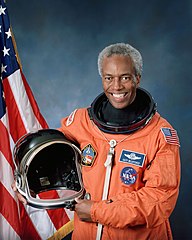
Get Your Head in Gear

The new Seminole SECME shirt is available in our Cafe Press store.

Wednesday, November 11, 2009

GIVE BLOOD—IT’S NOT ROCKET SCIENCE!

GIVE BLOOD—IT’S NOT ROCKET SCIENCE!

Each pint improves ‘STEM’ education
Seminole Ridge National Honor Society and SECME students will host a blood drive Tuesday, November 17 from 7:30 AM to 2:30 PM. Our theme “GIVE BLOOD—IT’S NOT ROCKET SCIENCE” spotlights students’ achievement in STEM classes: science, technology, engineering, and math.

Florida's Blood Centers will donate approximately $20 per unit of blood collected to the Scholarship Assistance Foundation to support tuition assistance for students attending colleges, universities, community colleges, institutions, and technical centers.

And for every pint of blood donated, SECME students will launch a water bottle rocket—a two-liter soda bottle filled with compressed air and water. SECME coordinator Erich Landstrom says, “Designing, building, and flying a water bottle rocket ignites students’ minds with a real-world application of STEM. Students manipulate and control variables. Math and science studies are necessary to complete the process—the physics of Newton’s laws of motion, the projectile motion, polynomial equations for freefall calculations, parabolic paths, and the practice of true engineering. These are the tools that an engineer uses to solve a problem.”

HOW TO GIVE BLOOD:
To donate blood, students must be in good health, be at least 16 years old, weigh at least 110 pounds, have turned in a signed parental consent form, and present a photo ID.

The quick and simple donation process includes registration, a health history survey, and blood pressure and iron level checks. A technician performs a brief medical screening to check blood pressure, pulse, and temperature and hemoglobin levels. This helps assure safe blood for patients, and also provides a quick check-up for donors. The entire process takes about 45 minutes, while the actual donation will only take about 10 minutes. Each donor also receives a free cholesterol screening.

The blood donated can be divided into platelets, plasma, and red cells. One pint can be used to help three different people. Blood is used for surgeries, emergencies, heart bypass, and cancer treatments. All blood types are welcome; however, Florida’s Blood Centers has a particular need of blood types O-negative and AB-negative, and of platelets.

For additional information about donating blood, contact NHS sponsor Mrs. Shawna Ahmad: ahmadsh (at) palmbeach (dot) k12 (dot) fl (dot) us

Tuesday, November 10, 2009

Seminole SECME Business Bash

Business Partners,

Attached is an invitation for you to attend our annual Business Bash on Thursday, November 19th beginning at 5:00 p.m. in the gymnasium. We hope you can attend or send a representative to see the many great things that are happening at the Ridge. Please share this information with your colleagues, email distribution list, neighbors, etc. Thank you for supporting our school.

Sincerely,
John Walker
Academy Coordinator/Business Partner Contact

Monday, November 9, 2009

2nd Annual Engineering Family Fun Day (EF2D)

The Society of Women Engineers (SWE) and
The National Society of Black Engineers (NSBE)
Presents:

2nd Annual Engineering Family Fun Day (EF2D)
When: November 14, 2009 from 10:00 AM to 2:00 PM
Who: 3rd — 12th Grade Students. This event will increase the students’ as well as their parents, teachers, and counselors’ knowledge of engineering and other technical fields.
What: Participate in engineering activities, with engineers, at one of our booths
- Hoop Gliders (will open as an Adobe PDF)
- Water Bottle Rockets
- Lemon Power
- One Wheel Racer
Why: To Discover Engineering with Fun Interactive Activities.
To educate the community on the opportunities available in an engineering education. To inspire an interest in the areas of math and science in young students from 3rd to 12th grade in Palm Beach County.
How: Show up on the event day and get ready to have fun and learn all at the same time
Where: Howard Park in West Palm Beach (across from the Kravis Center)
How much: Free Event! Bring a picnic basket, chairs and blanket and enjoy the day at the park.
Sponsored by: Pratt & Whitney Rocketdyne

For more information about EF2D contact the event organizers at EF2D@swe.org.
Or call 561.315.3598 or 561.670.4373

Sunday, November 8, 2009

They Might Be Giants - Speed and Velocity

Saturday, November 7, 2009

Water Rocket Construction seminar

Seminole SECME attended the water bottle rocket design seminar hosted by Don Estridge High Tech Middle School on Saturday, November 7, 2009. SECME school coordinator Mr. Erich Landstrom is very proud of the work done by the students. GO HAWKS!

Excerpted from the Water Rocket Construction activity of NASA's Rocket Educator Guide. Working in teams, students construct a simple bottle rocket from two-liter soft drink bottles and other materials. The rocket is powered by air pressure and water.

For example, Seminole SECME Hawk Team


Objective Student teams will construct water rockets and successfully launch them. Success!


Description Using 2 liter plastic soft drink bottles, cardboard or Styrofoam food trays, tape, and glue, small teams of students design and construct rockets. A simple assembly stand assists them in gluing fins on their rockets, and a nose cone is mounted on the top. The rocket is launched with a special launcher.


Gardner


Moore


Narcisse and Gardner


Dosch and Bartels


Pham and Masters


Zawackis


Procedure

1. Set up a supply station with materials such as Styrofoam food trays, posterboard, tape, sandpaper, and art supplies.

2. Divide students into teams for constructing rockets. Discuss construction techniques for their rockets. Give each team an assembly stand and a 2-liter soft drink bottle. Require teams to keep track of the materials they used.

3. Describe how fins can be smoothed with sandpaper to slice through the air with little drag.

4. Review launch procedures with the teams. Conduct an inspection before the launch to ensure that rocket fins and nosecone are securely attached. Inspect each team’s rocket for the construction skill employed.


5. Set up a tracking station for measuring the altitudes achieved by the rockets. Follow all safety procedures and instructions when launching the team rockets.


Background


A water rocket is a chamber, usually a 2-liter soft drink bottle, partially filled with water. Air is forced inside with a pump. When the rocket is released, the pressurized air forces water out the nozzle (pour spout). The bottle launches itself in the opposite direction. The bottle usually has a nose cone for streamlining and fins for stability. Water rockets are easily capable of 100-meter-high flights, but advanced hobbyists have combined bottles and staged bottles for flights over 300 meters high.

Water bottle rockets are ideal for teaching Newton’s laws of motion. The launch of the rocket easily demonstrates Newton’s third law. Students can see the water shooting out of the nozzle (action) and see the rocket streak into the sky (reaction). Students can also experiment with different pressure levels inside the chamber and different amounts of water. The rocket will not fly very high if it is filled only with air. The air will quickly rush out during the launch, but its mass is very low. Consequently, the thrust produced is also low (Newton’s second law). By placing water in the bottle, the air has to force the water out first before it can leave the bottle. The water increases the mass expelled by the rocket, thereby increasing the thrust.

Like all rockets, the flight performance of water bottle rockets is strongly influenced by the rocket’s design and the care taken in its construction. Beveling the leading and trailing edges of fins allows them to slice through the air more cleanly. Straight-mounted fins produce little friction or drag with the air. A small amount of ballast weight inside the nose cone helps balance the rocket. This moves the center of mass of the rocket forward while still leaving a large fin surface area at the rear.

Bartels and Dosch prelaunch

Bartels and Dosch water bottle rocket launch


video


Masters and Pham prelaunch

Masters and Pham water bottle rocket launch
video

Friday, November 6, 2009

Lord of the Rings

Seminole Ridge student is first ever to twice win NASA essay contest to explore Saturn.

A Seminole Ridge student is once again the winner of NASA‘s annual "Cassini Scientist for a Day" essay contest. And—once again—it‘s the same student! NASA‘s Jet Propulsion Laboratory delivered the out-of-this-world congratulations to Hawk senior Anthony Bass, the first-ever essayist to win their contest twice.

"Cassini Scientist for a Day" challenges students to 'become NASA scientists' studying the planet Saturn through the robotic spacecraft Cassini. Participants examine three target images taken by Cassini and choose the one they think will yield the best science, supporting their choice in a 500-word essay.

Nearly 400 students nationwide entered the contest, but NASA researchers were impressed most—for the second year in a row—with Bass‘ entry. Here‘s an excerpt: "If we could analyze the composition of the impurities and isotopes of Saturn‘s rings, they could provide us with clues as to where they came from. When we look for clues in the composition of the main rings and compare this data to the composition of Saturn‘s other moons, is it really possible that these rings started as a moon?" This view of Saturn, its rings and the moon Tethys represents "Target 1" in the fall 2009 edition of the Cassini Scientist for a Day contest online at http://saturn.jpl.nasa.gov/photos/imagedetails/index.cfm?imageId=3704

Target 1

Mr. Landstrom uses the NASA contest as teaching opportunity for his students to practice their FCAT Writes persuasive essay skills, and encourage excellence in FCAT Science. Seminole Ridge students learned about possible images that the cameras on Cassini could take on October 11, 2009. Students needed to weigh all the factors and choose one of the targets. What do we already know about Saturn, its rings, and its moons? What do we hope to learn from the image selected? The decision is based on which image would yield the most scientific results, but the artistic value of the image can be an added bonus. The cameras on NASA Cassini-Huygens Mission have been taking stunning images of Saturn for the past five years. These images have helped planetary scientists learn more about this amazing planet.

The award certificate is to be mailed to the school. “A copy of the certificate and his essay hang in my classroom” said Mr. Landstrom, Seminole Ridge High School science teacher. Anthony is applying for admission to the Air Force Academy so that he may pursue a career in the field of aerospace/aeronautical engineering.

Great job, Anthony! Winning a national essay contest for an interplanetary mission is impressive. Winning that contest twice in a row is simply amazing!

Thursday, November 5, 2009

STEMinar at Seminole Ridge High

S.T.E.M.inar at Seminole Ridge High School

Saturday, December 12, 2009
8:30 am – 1:00 pm


Attention: SECME students and school coordinators!
Join master teachers, proud parents and creative community engineers to work on Olympiad projects. Build and break bridges; blast off bottle rockets; blueprint your banners; and battle in the brain bowl!

Register online at
http://tiny.cc/m9vDR
Email questions to Erich Landstrom at SeminoleSECME [at] gmail [dot] com

Please bring any existing Olympiad submission which you would like to receive assistance. Bring any necessary supplies (such as balsa wood, glue, etc.) for projects that you want to start that day.

Directions to Seminole Ridge High: Travel west on Southern Blvd. (SR 80, or Route 441), or Okeechobee Blvd to Seminole Pratt Whitney Road. Turn north. School on west, across from Callery Judge Grove, before Winn-Dixie plaza.

Wednesday, November 4, 2009

Water Bottle Rocketry

Engage
Design a rocket around a plastic 2 liter soda bottle that stays in the air the longest possible time (proxy for how high an altitude it can achieve).
Explain
High school students can document their abilities with the following concepts: inertia, gravity, air resistance, Newton's laws of motion, acceleration, relationships between work and energy or impulse and momentum, projectile motion, freefall calculations, internal and external ballistics, and the practice of true engineering.
NASA's Guide to Bottle Rockets
The rocket is made from a 2-liter soda bottle. Before launch, the bottle is filled with some amount of water, which acts as the "propellant" for the launch. Since water is about 100 times heavier than air, the expelled water produces more thrust than compressed air alone. The base of the bottle is only slightly larger than the launch tube. When the rocket is placed on the launch tube, the body tube becomes a closed pressure vessel. The pressure inside the body tube equals the pressure produced by the air pump. Fins are attached to the bottom of the body tube to provide stability during the flight. Explore
1. The rocket must be constructed using a standard plastic 2L soda bottle.
2. The only adhesive permitted in construction is low-temp glue (using a low-temp glue gun).
Note: Use of a hot-melt glue gun will result in a deterioration of the bottle and possible rupture of the bottle upon pressurization. Evaluate
1. The rocket must stay intact during the entire flight; no parts can fall off or separate during flight.
2. Rockets should be tested at low pressure (70 psi or less) before the competition.
video

video
Water Bottle Rocketry Winner Entry
videoCongratulations! Extend
• Include a payload of an “egg-stronaut” - a raw, large, Grade A chicken egg. Design a hydro rocket to safely return the egg-stronaut to Earth.
• Design a hydro rocket to land closest to a target area.
• Assign dollar amounts to supplies (bottles, glue, fin material, parachutes) and judge the rocket on cost efficiency (cost per second of hang time). But keep working on your MTV!

Tuesday, November 3, 2009

Engineer Your Life: a guide to engineering careers for high school girls!

http://engineeryourlife.org/

Engineer Your Life is a website guide to engineering careers for high school girls! Imagine what life would be like without pollution controls to preserve the environment, life-saving medical equipment, or low-cost building materials for fighting global poverty. All this takes engineering. In very real and concrete ways, women who become engineers save lives, prevent disease, reduce poverty, and protect our planet. Dream Big. Love what you do. Become an engineer.